BBC Sport app Navigation
This project focused on improving the BBC Sport app’s side navigational menu as the design was outdated and inconsistent with other BBC apps.
I used this project for part of my degree apprenticeship where I could showcase my skills in researching, designing and delivering a proposed solution to a problem. I achieved a ✨Distinction✨ for the delivery, report and presentation of this project.
Platform
iOS & Android, mobile and tablet
Methods
IA audit, Stakeholder workshop, Usability testing, Iterative designing
Timeline
12 weeks, Oct 2025 - Feb 2026
Role
Lead UX Designer
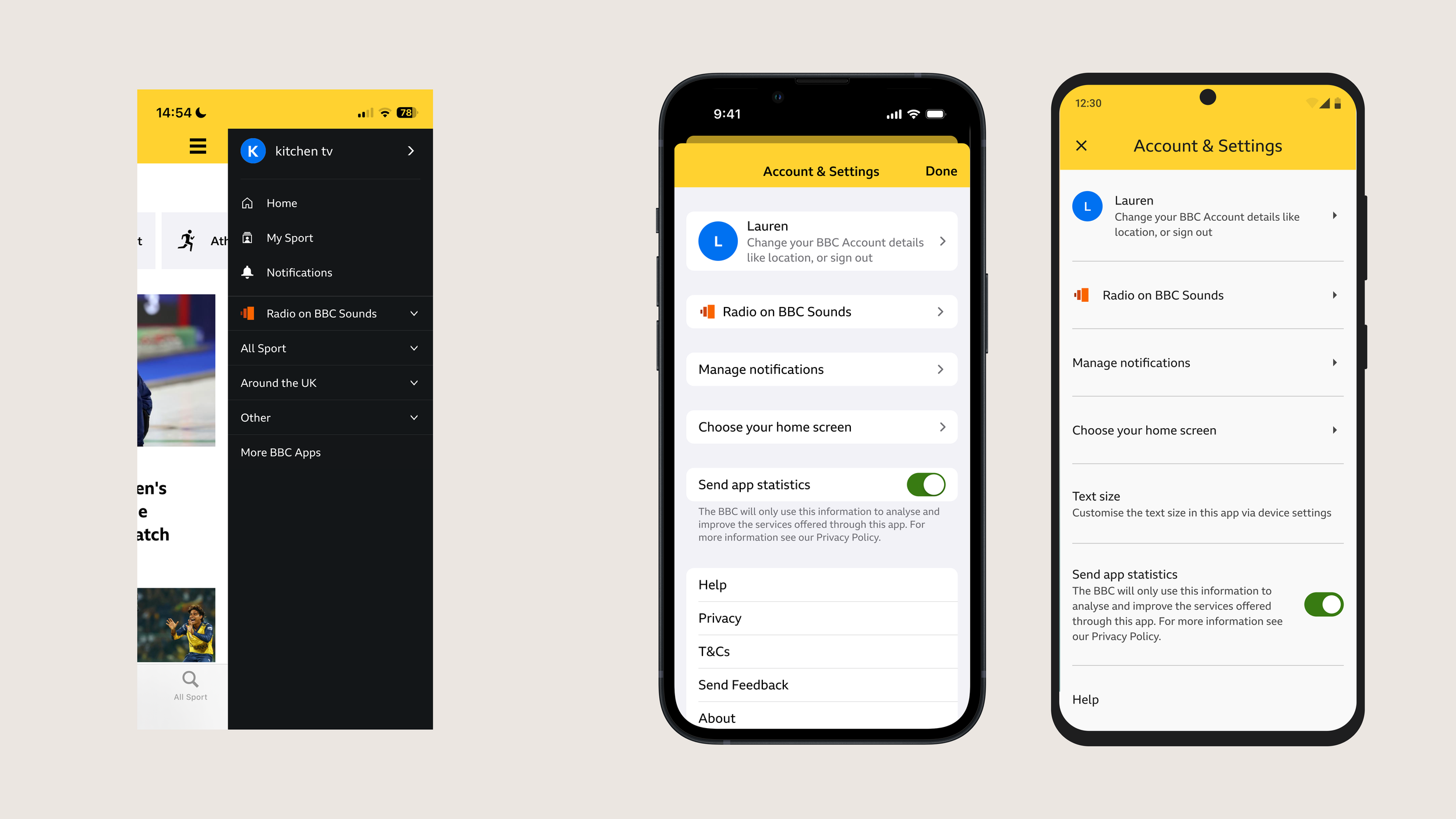
The Project
The problem:
The BBC Sport app uses an outdated side menu that duplicates functionality and does not align with BBC App Design System (ADS), creating inconsistency and potential user confusion.
Research question:
How might we improve the information architecture of the BBC Sport app’s navigation to create a clearer and more consistent experience across BBC products?
Aim:
To evaluate the effectiveness of the current navigation and propose a validated, ADS-aligned alternative.
Scope:
Focused on navigation and IA only — specifically rehoming features from the side menu (account, settings, radio, and nations content).
The Double Diamond Framework
From The Design Council
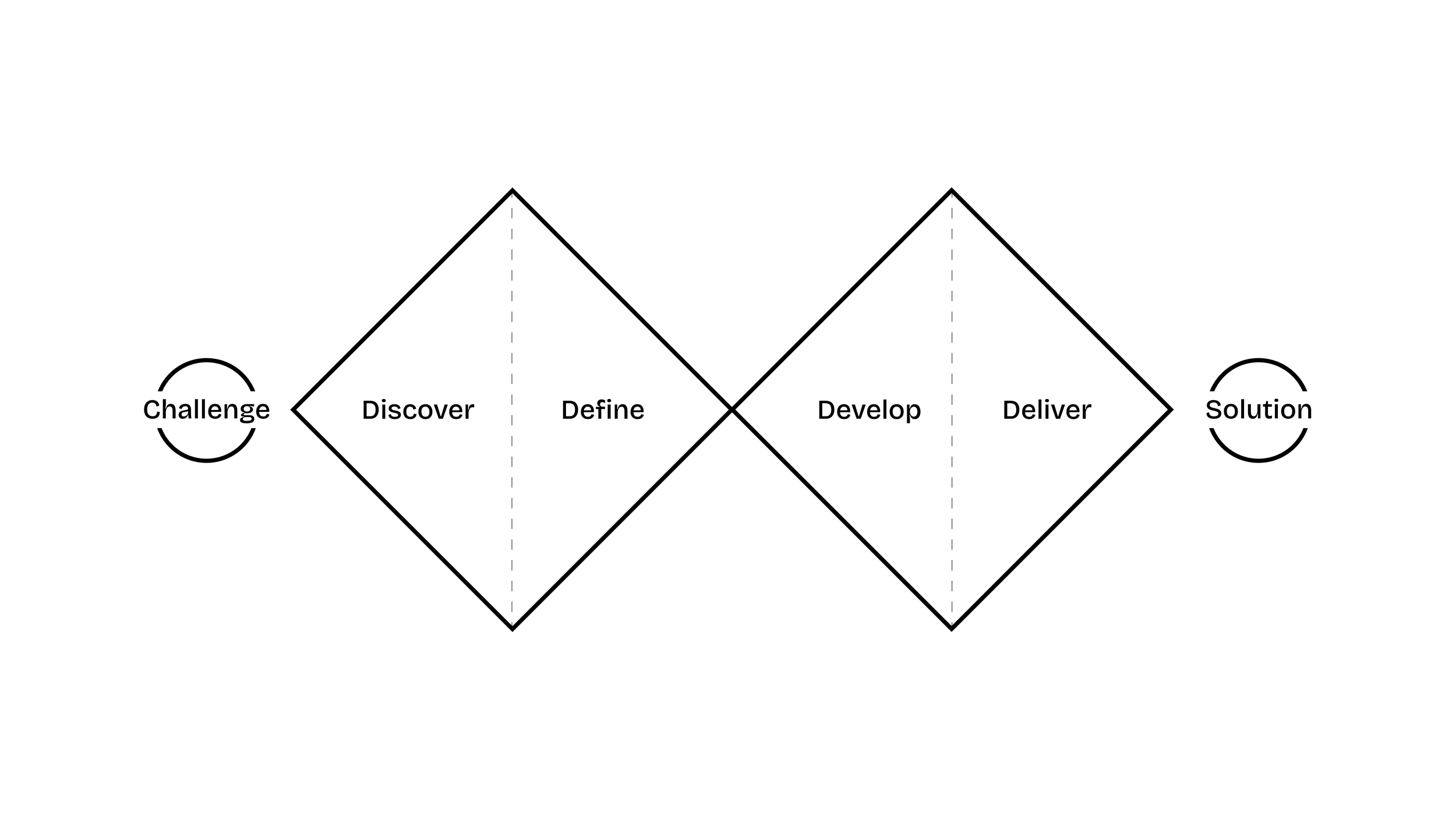
A user-centred design and mixed methods research approach was used, combining qualitative and quantitative research with iterative design and testing. The project was structured into four phases to align with the Double Diamond design process, with a timeline mapped out across the 12 weeks to ensure the project stayed on track.
Methods
Navigation audit and IA mapping
Quantitative usage data analysis
Unmoderated usability testing
Stakeholder workshop
Design reviews
Tools
Miro
FigJam
UserZoom
Piano (internal quant tool)
Figma
Discover
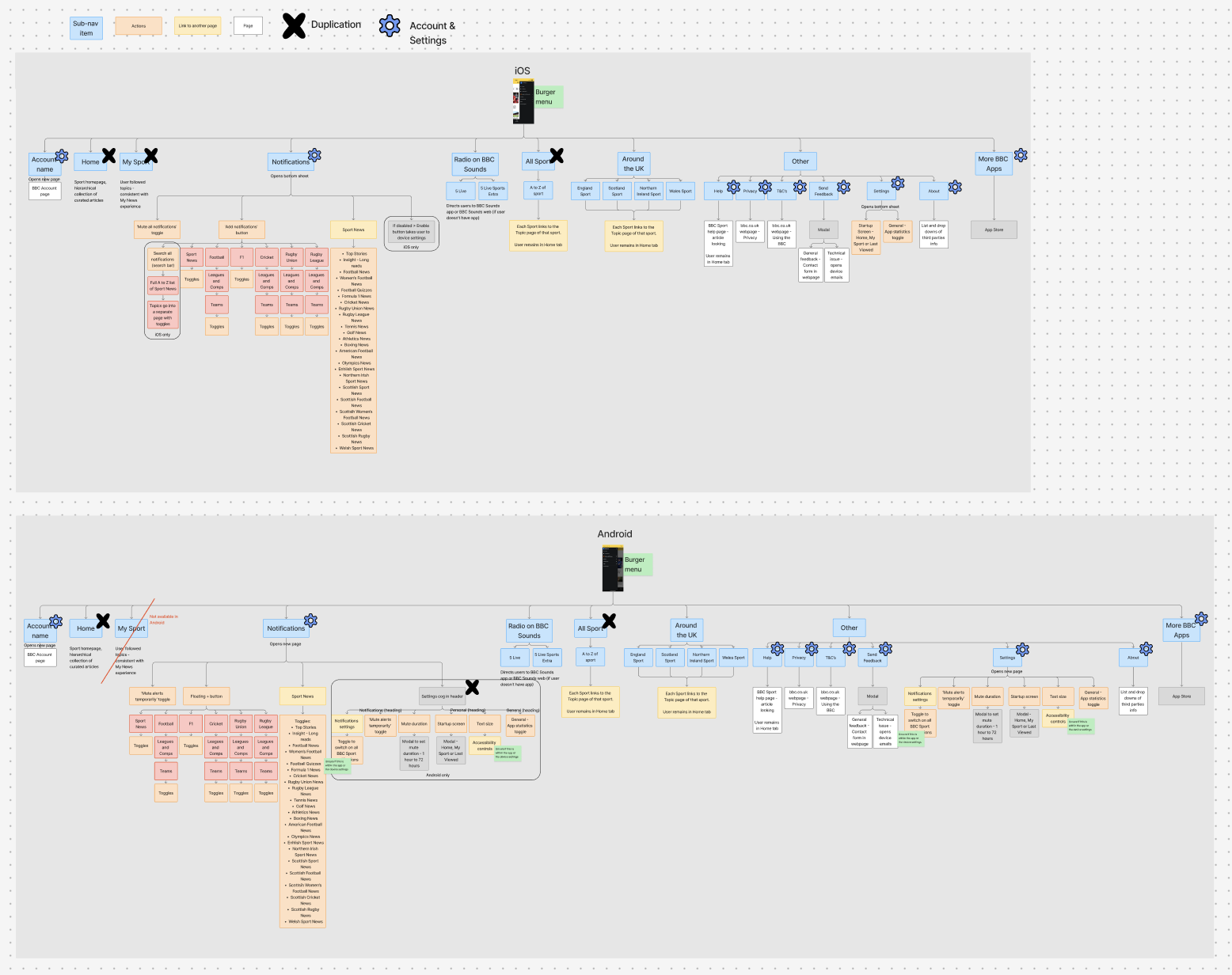
I audited the existing side menu using sitemaps to understand the information architecture and its role within the app’s navigation.
What I found was a navigation system that had grown organically over time without a clear structure, one that I liked to describe as a kitchen drawer full of everything and anything. The result was a menu that lacked hierarchy, purpose and clarity for the user.
Key findings:
There was duplicated primary navigation in the menu that could also be found within the bottom tabs (Home, My Sport, All Sport)
Most links corresponded with account and settings features that had no clear grouping
Two features were unique to the side menu:
Radio links (BBC Sounds)
Nations / “Around the UK” content
Despite their placement, usage data showed continued engagement with both features — indicating that they needed to remain discoverable.
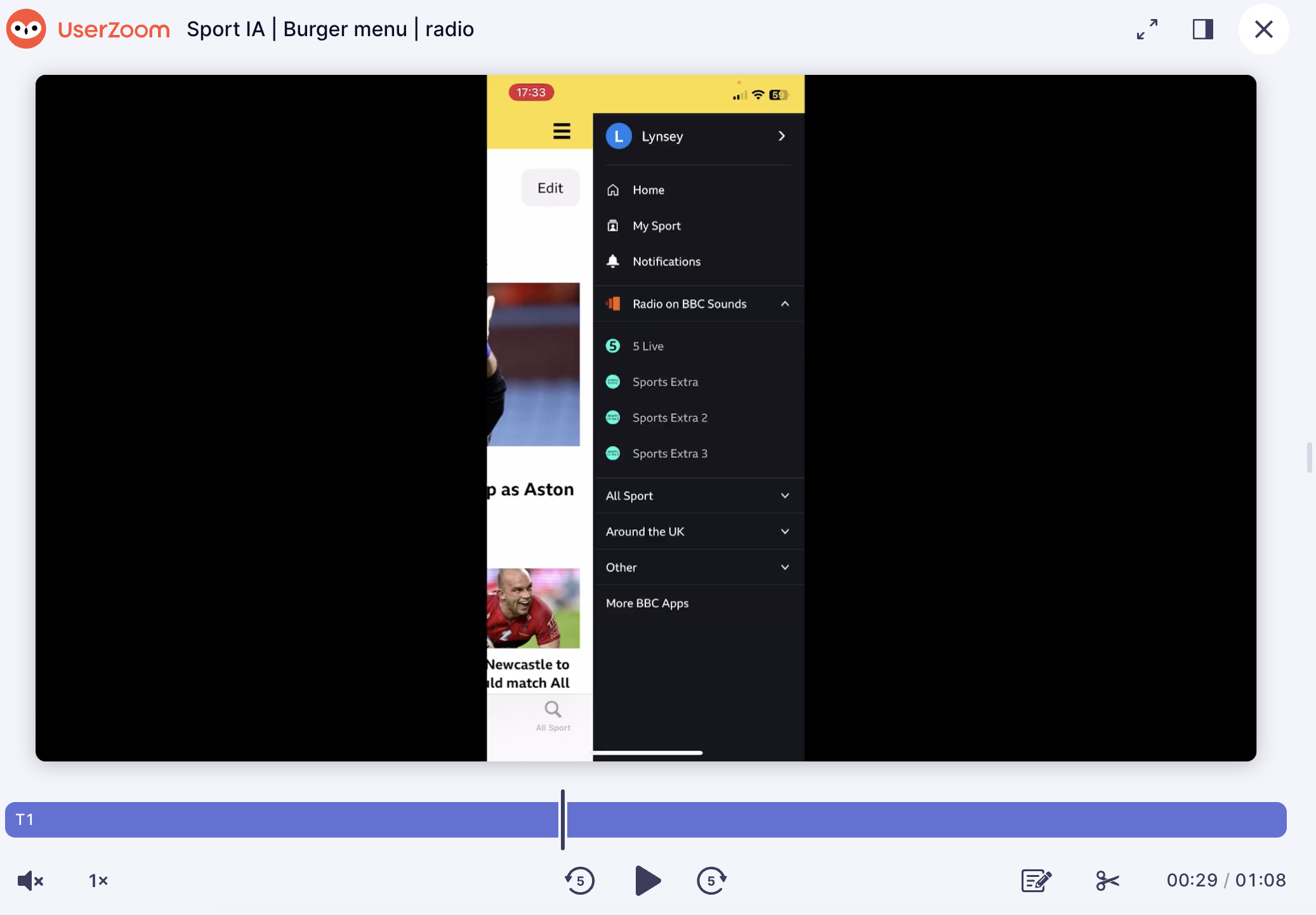
To validate assumptions, I conducted unmoderated usability testing with 26 participants across iOS and Android via UserZoom, setting two key tasks;
Find content for their home nation (England, Scotland, Wales or Northern Ireland)
Find out how to listen to BBC Sport on the radio
. The key insights found were;
The side menu was used as a last resort, not a primary navigation tool with most participants using the side menu first for the radio task - suggesting users associated it with discovery and exploration
Participants expected Nations content in more intuitive locations, such as within content or search, with several falling back to the side menu when they couldn’t find what they were looking for
These findings confirmed that while the menu could be removed, content relocation needed to be carefully handled to maintain discoverability.
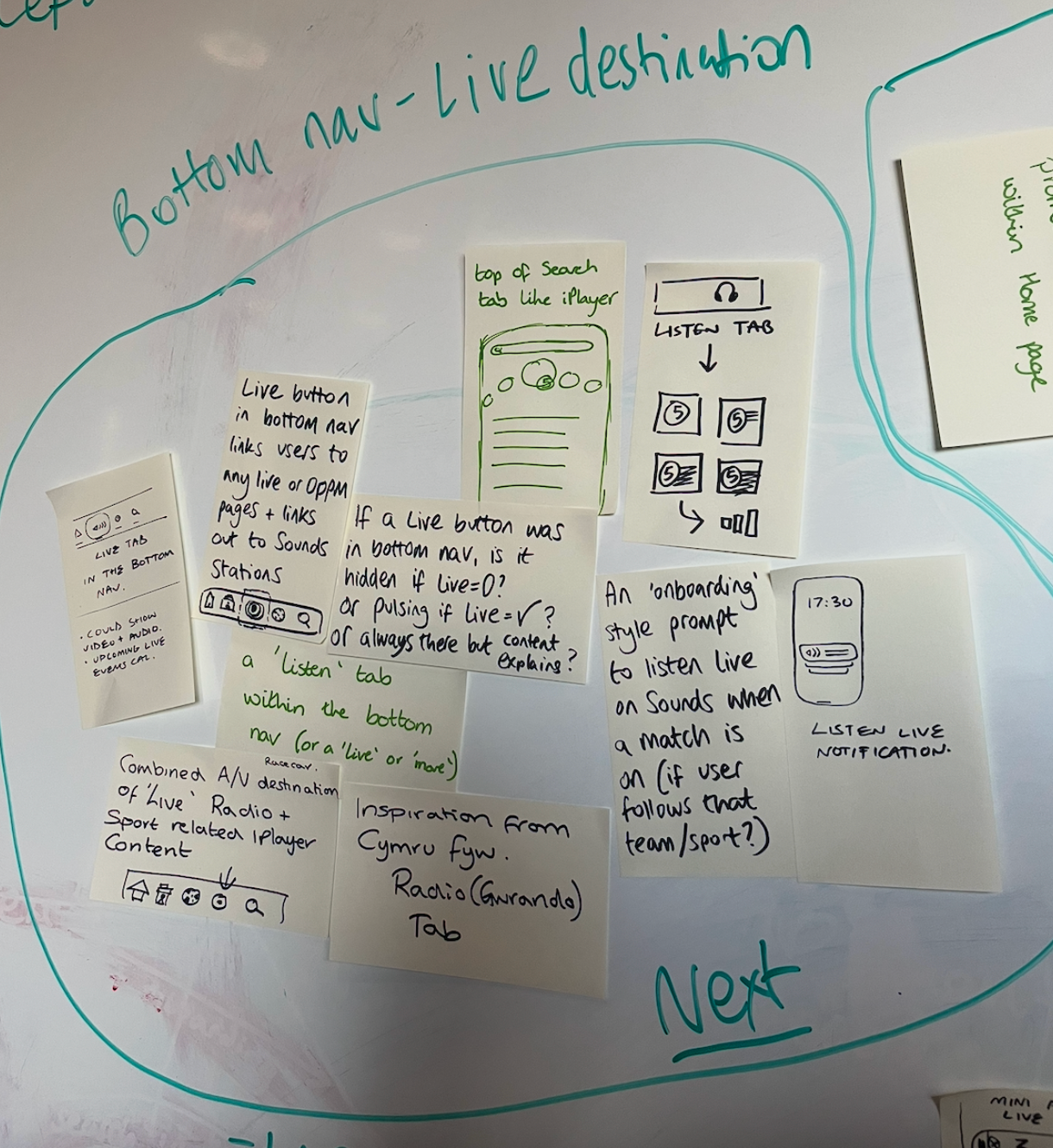
A further interesting finding was that most participants associated radio with live content, expecting it to sit alongside live stories, live scores or live viewing.
Define
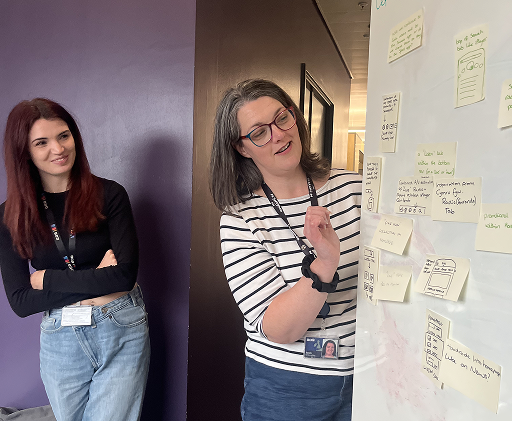
I synthesised the findings using affinity mapping to identify patterns and themes across participant behaviour. I then compiled these into a presentation to share with stakeholders, clearly communicating what the research had uncovered and what it meant for the direction of the project.
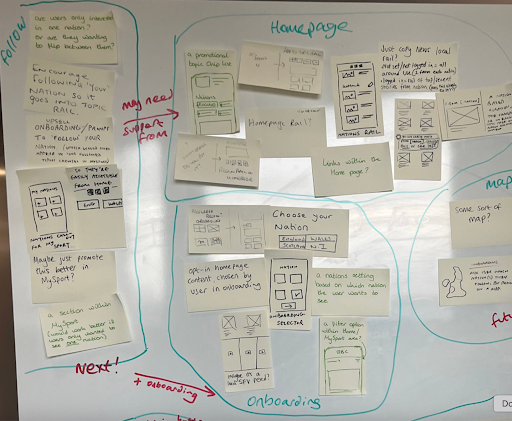
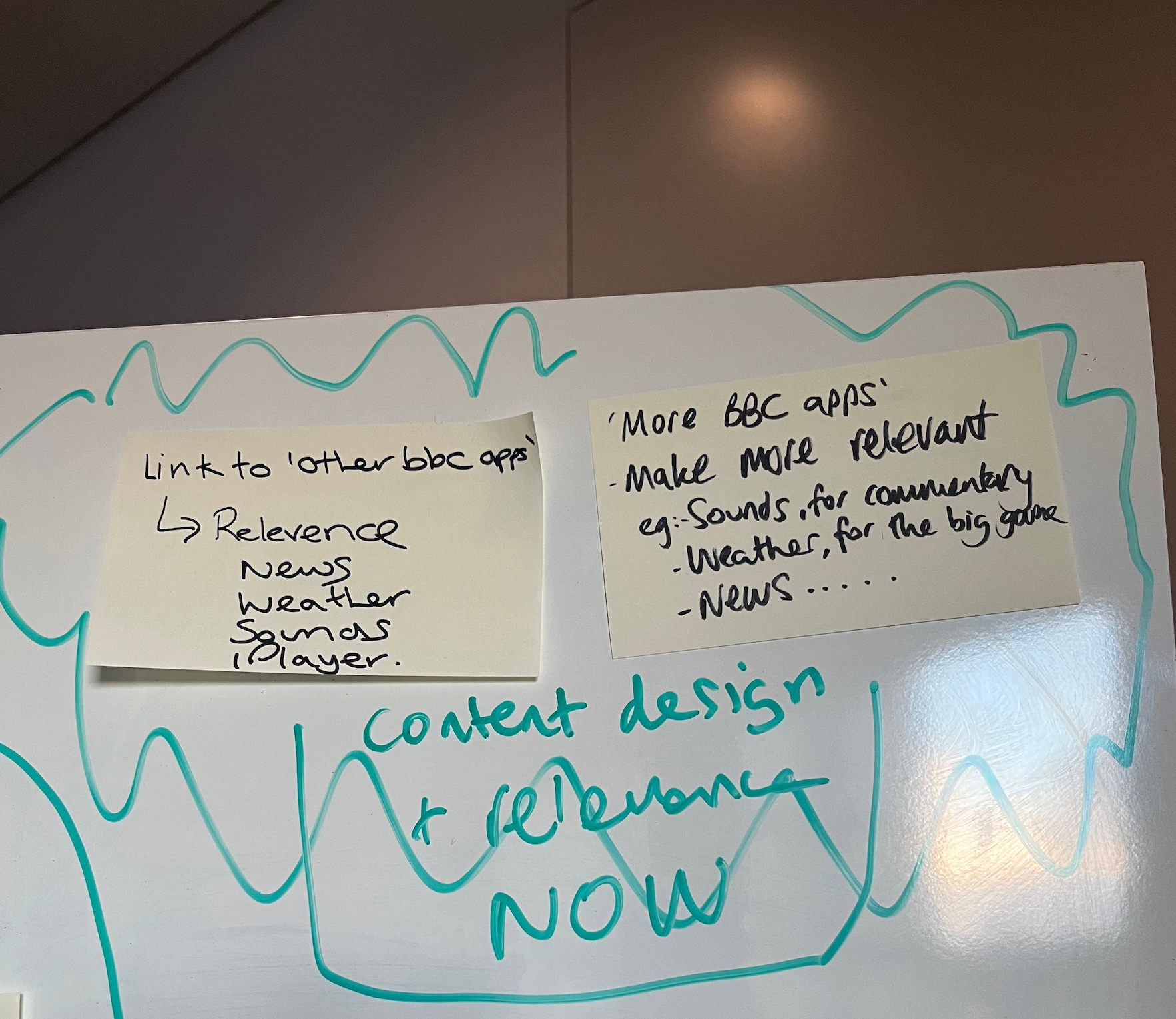
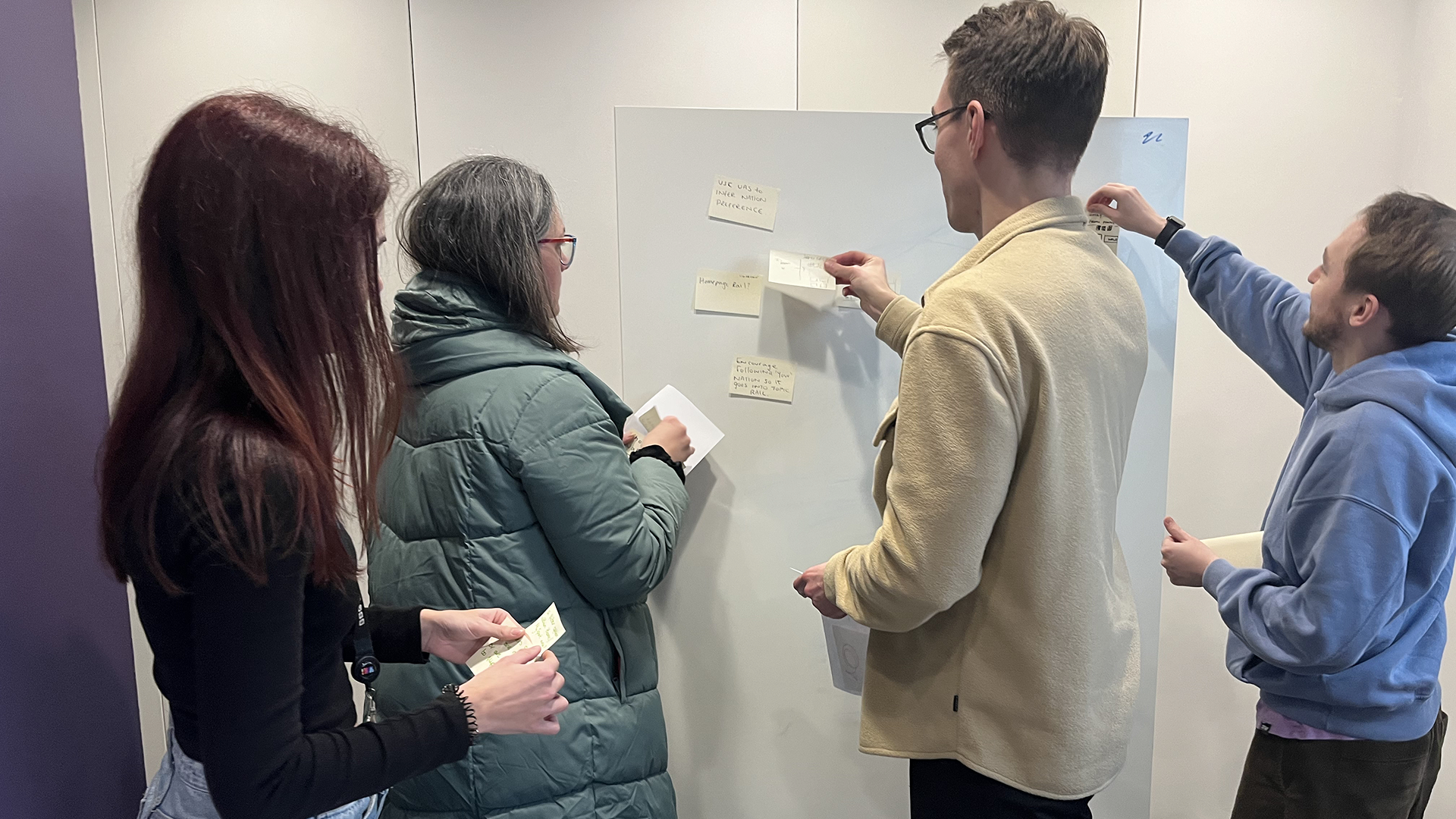
I then facilitated a cross-functional workshop with stakeholders across design, product, and engineering to explore navigation restructuring. The goal was to collaboratively explore potential solutions to the nations and radio problems, align on priorities, and define what was realistically in scope for this project.
Workshop outcomes:
Generated “now vs next” radio and nations concepts
Explored multiple placements for Radio and Nations content
Aligned on simplifying overall information architecture
One area that warranted further discovery was the relationship between radio and live content — something several participants had instinctively connected during testing. However, given the time and scope constraints of the project, this wasn't something we were able to explore further at this stage.
Develop
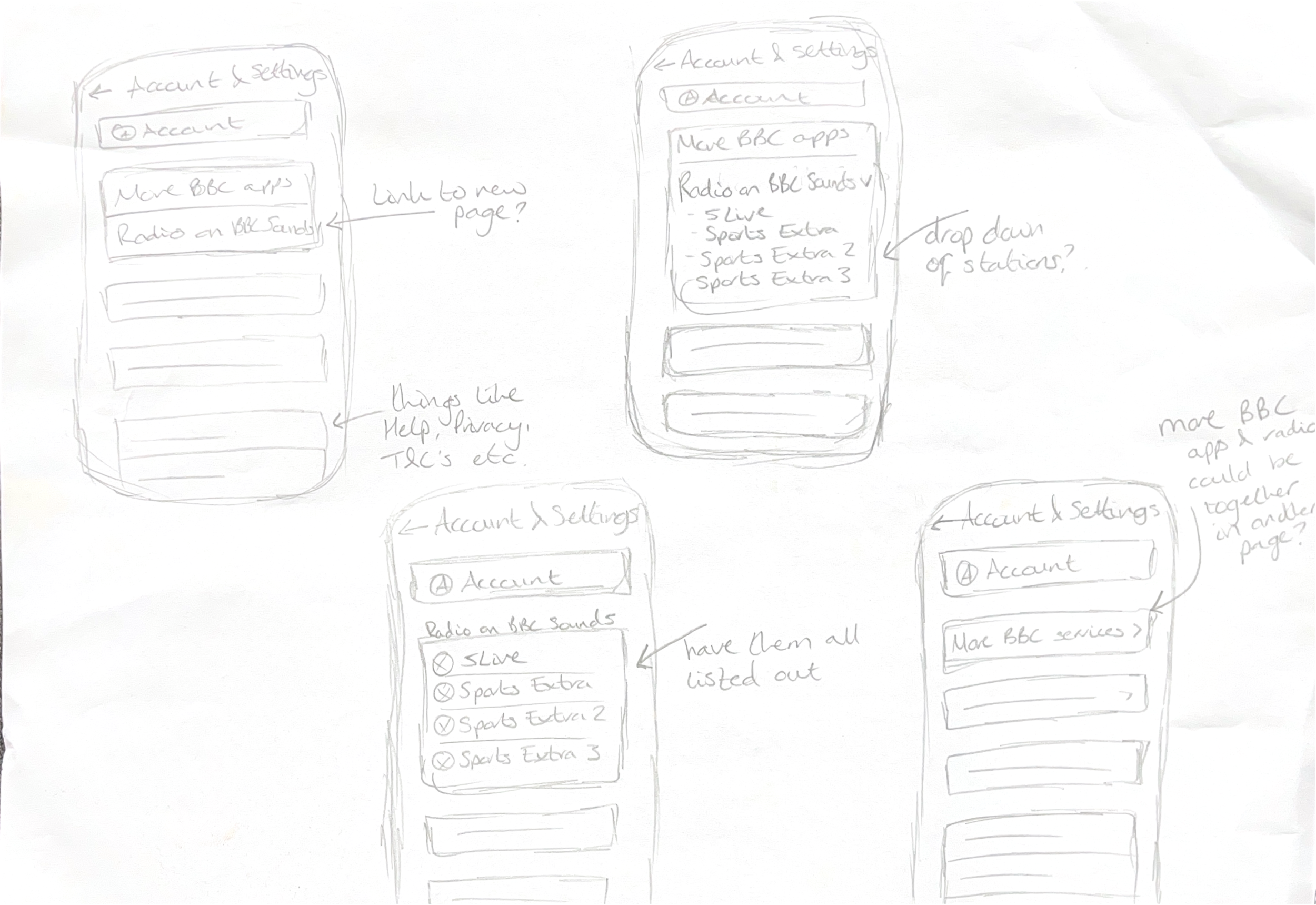
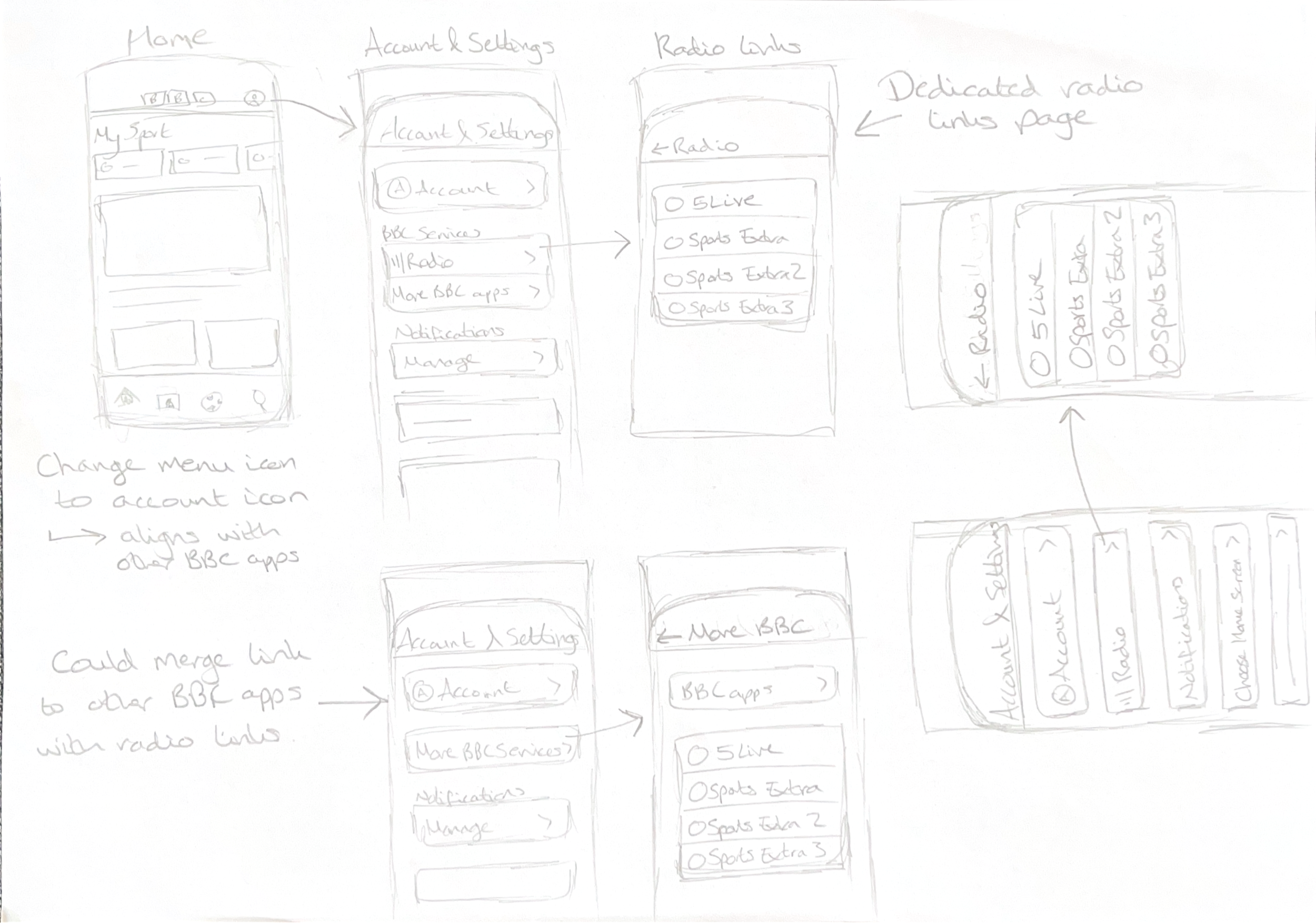
I began with low-fidelity wireframes to rapidly explore navigation structures and user flows. This allowed quick iteration focusing on hierarchy and interaction patterns, before committing to UI. While the direction from the workshop was fairly clear, sketching allowed me to explore different layout options quickly.
Alongside the initial designs, I created a revised sitemap to map out the new information architecture, making the structural changes understandable and easy to discuss with stakeholders before investing time in high-fidelity designs.
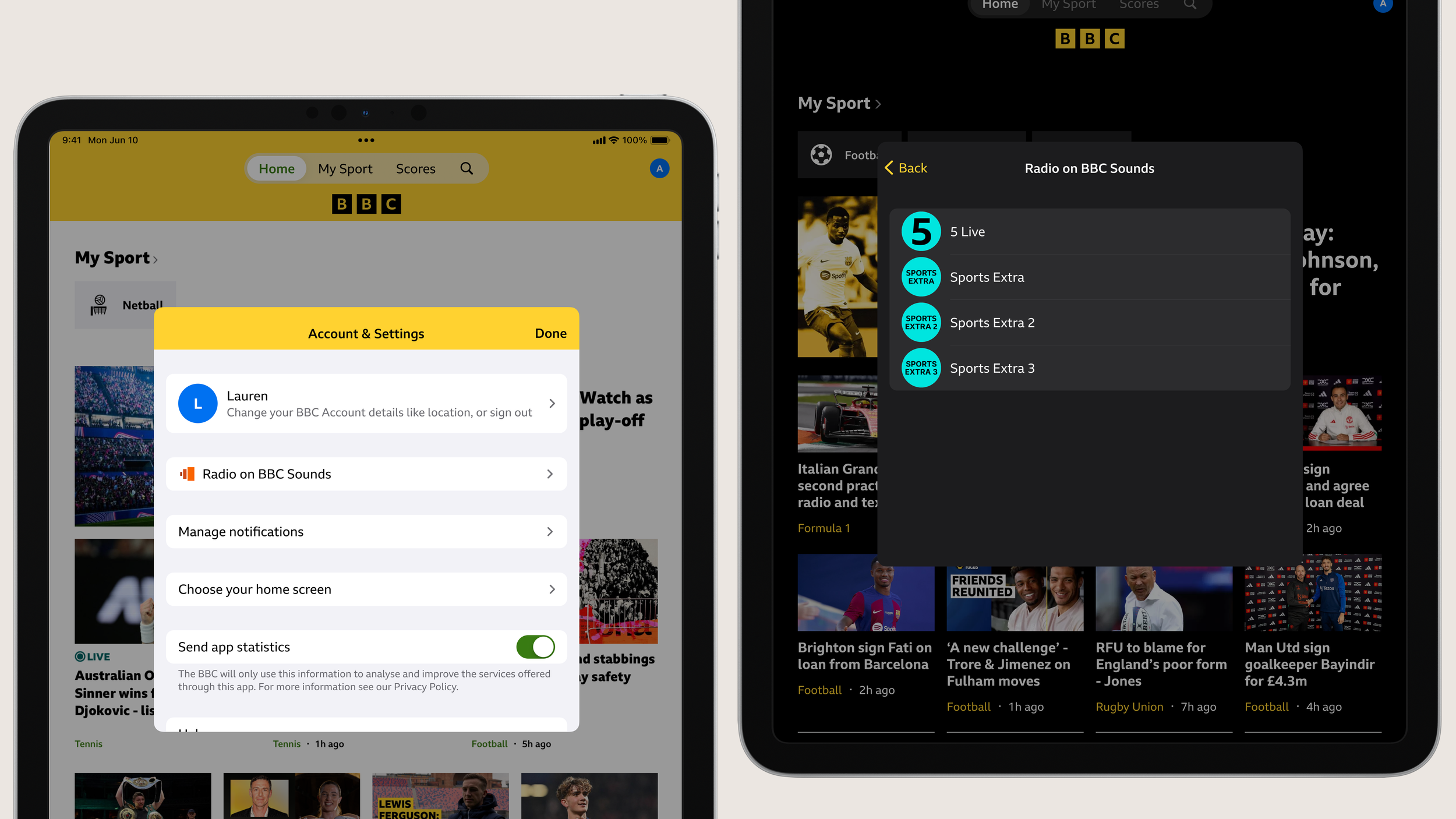
Using BBC App Design System components, I moved into high-fidelity designs for iOS and Android on mobile, ensuring consistency, accessibility, and a native-first approach from the start. These designs were regularly taken to UX review sessions with colleagues to gather early feedback and check key decisions before progressing further. One notable evolution during this stage came from those reviews — during the workshop we had grouped Radio alongside ‘More BBC Apps’ on the basis that both linked users away from the Sport app. However, through design review it became clear this grouping felt forced and unnecessary, so I separated them out. It was a small but important change that kept the Account & Settings area clean and logical.
Key design decisions made:
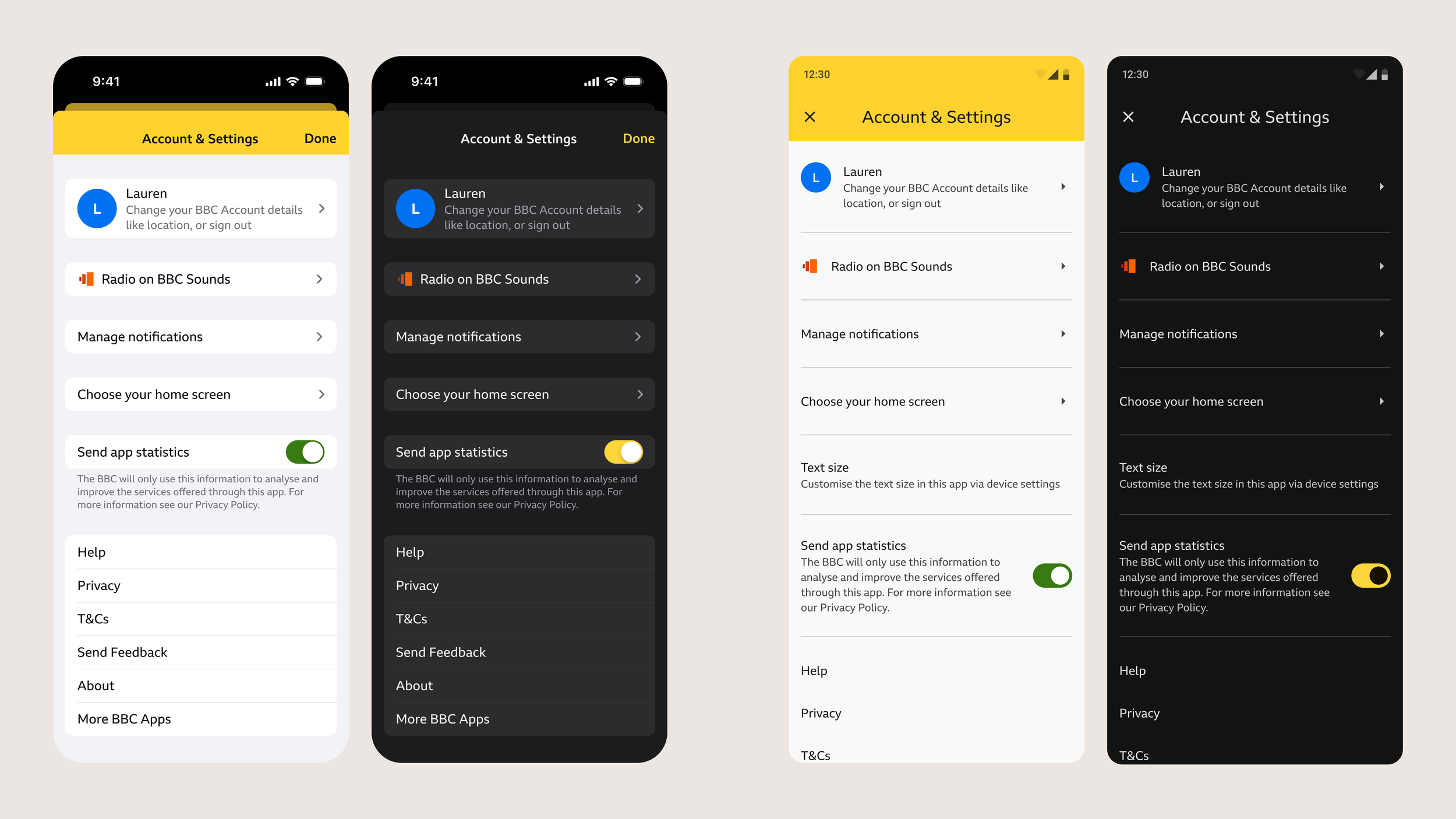
Replaced the side menu with a dedicated Account & Settings area to maintain consistency with other BBC apps
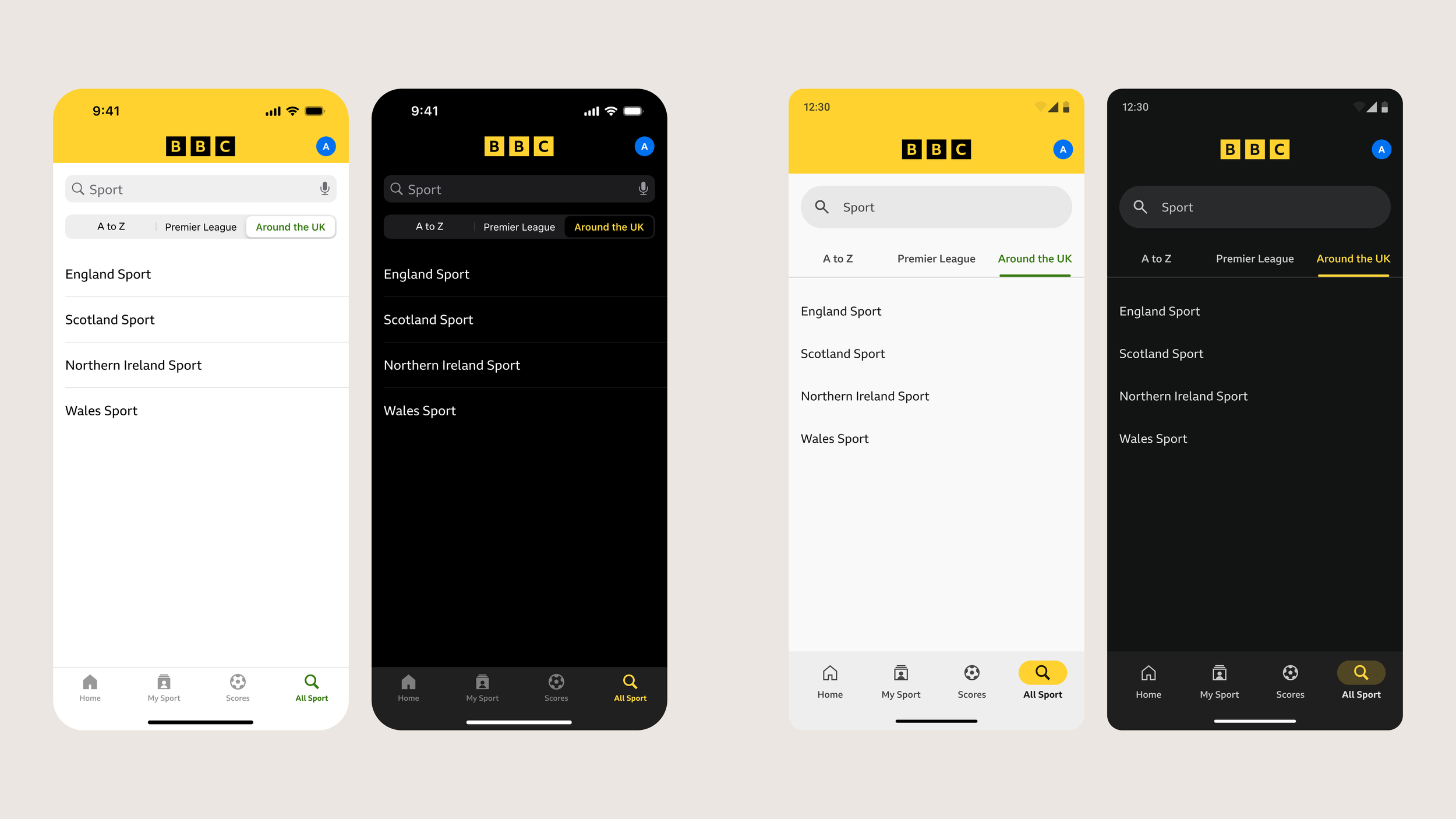
Moved Nations content into the All Sport tab for greater visibility as per the results of the UserZoom
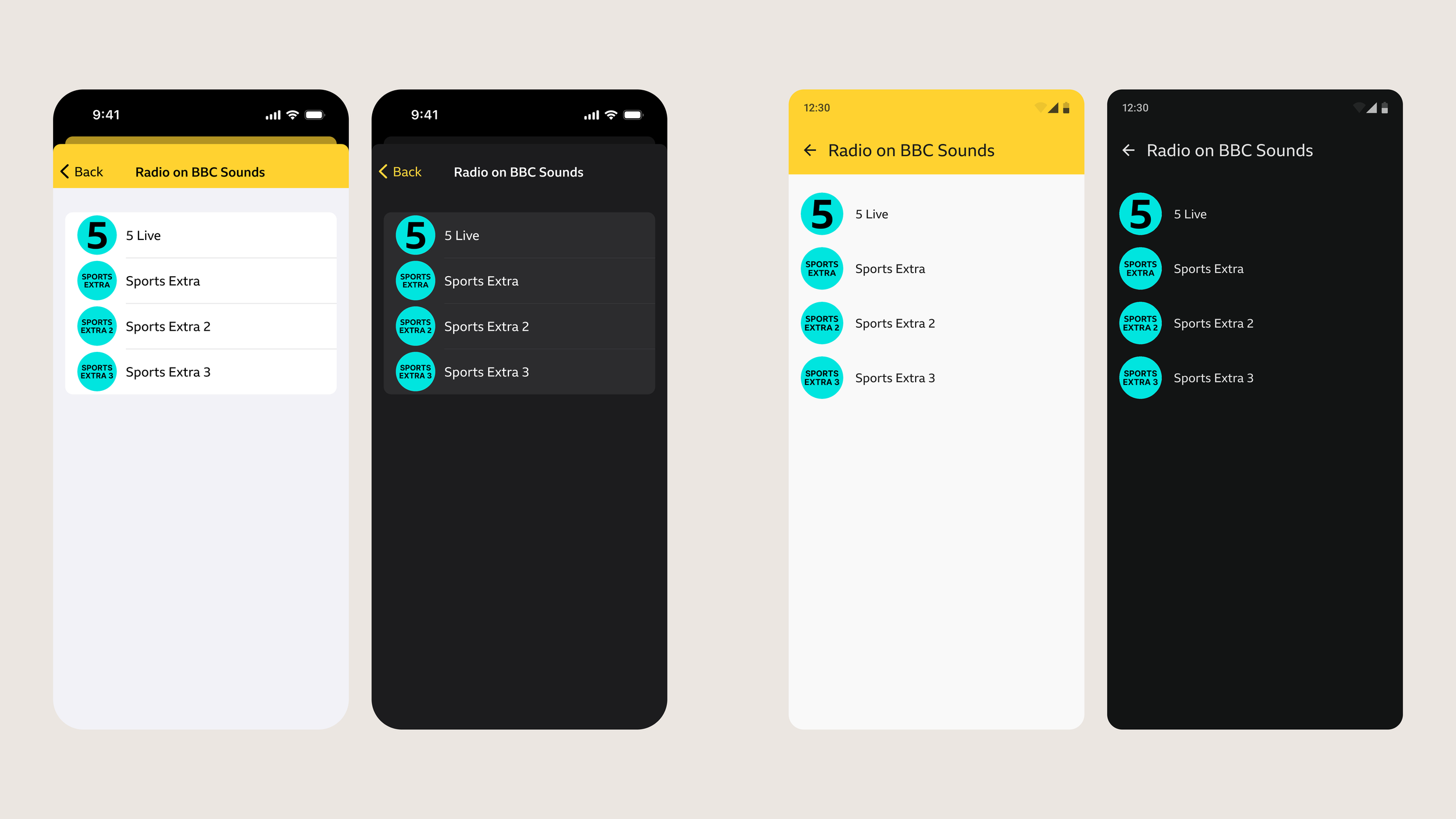
Retained Radio links within Account & Settings as an interim solution
Deliver
I validated the final designs through further unmoderated usability testing via UserZoom with 82 participants across iOS and Android. Research was analysed through behavioural note-taking and affinity mapping to identify key themes.
Outcomes:
Nations content was easily discovered within the All Sport (search) tab, and participants easily located the nation section
Minimal negative reaction to removing the side menu, with participants not noticing the side menu was gone - a strong signal that the new structure felt natural and intuitive
Difficulty locating Radio within Account & Settings - other discovery options were taken such as scrolling the home page and looking for Live content. Significantly, some participants gave up entirely and were unable to locate Radio at all, a finding that couldn’t be ignored.
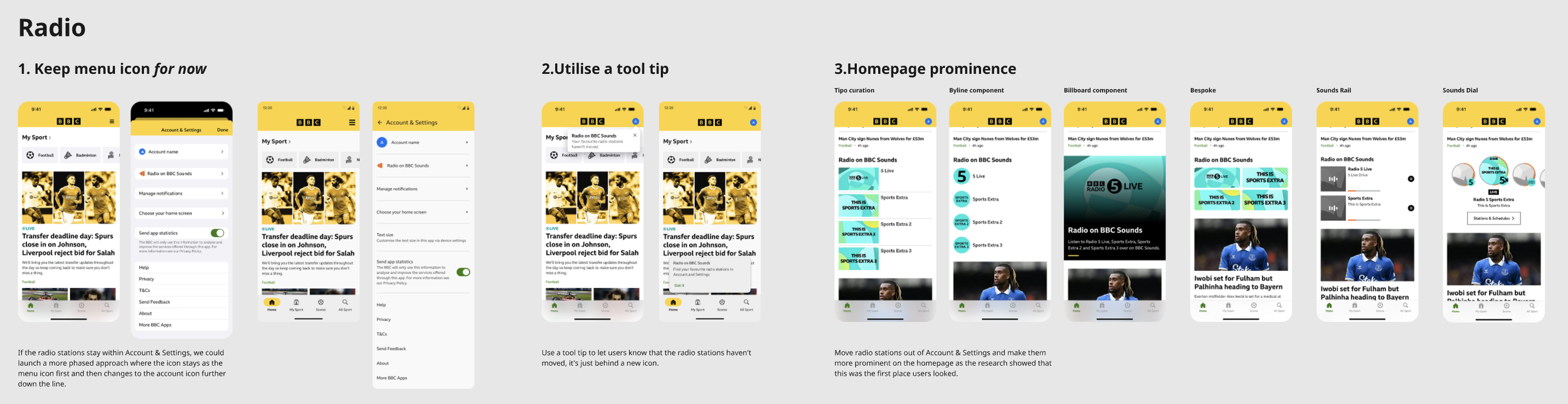
Due to the hesitancy from users when trying to locate Radio, I provided stakeholders with options on how to proceed. One option was to create a more phased approach and not change the menu icon in the first approach, another option was to use a tooltip to inform users where to find radio, and lastly an option would be to move radio out of Account and Settings and give it a higher prominence elsewhere in the app.
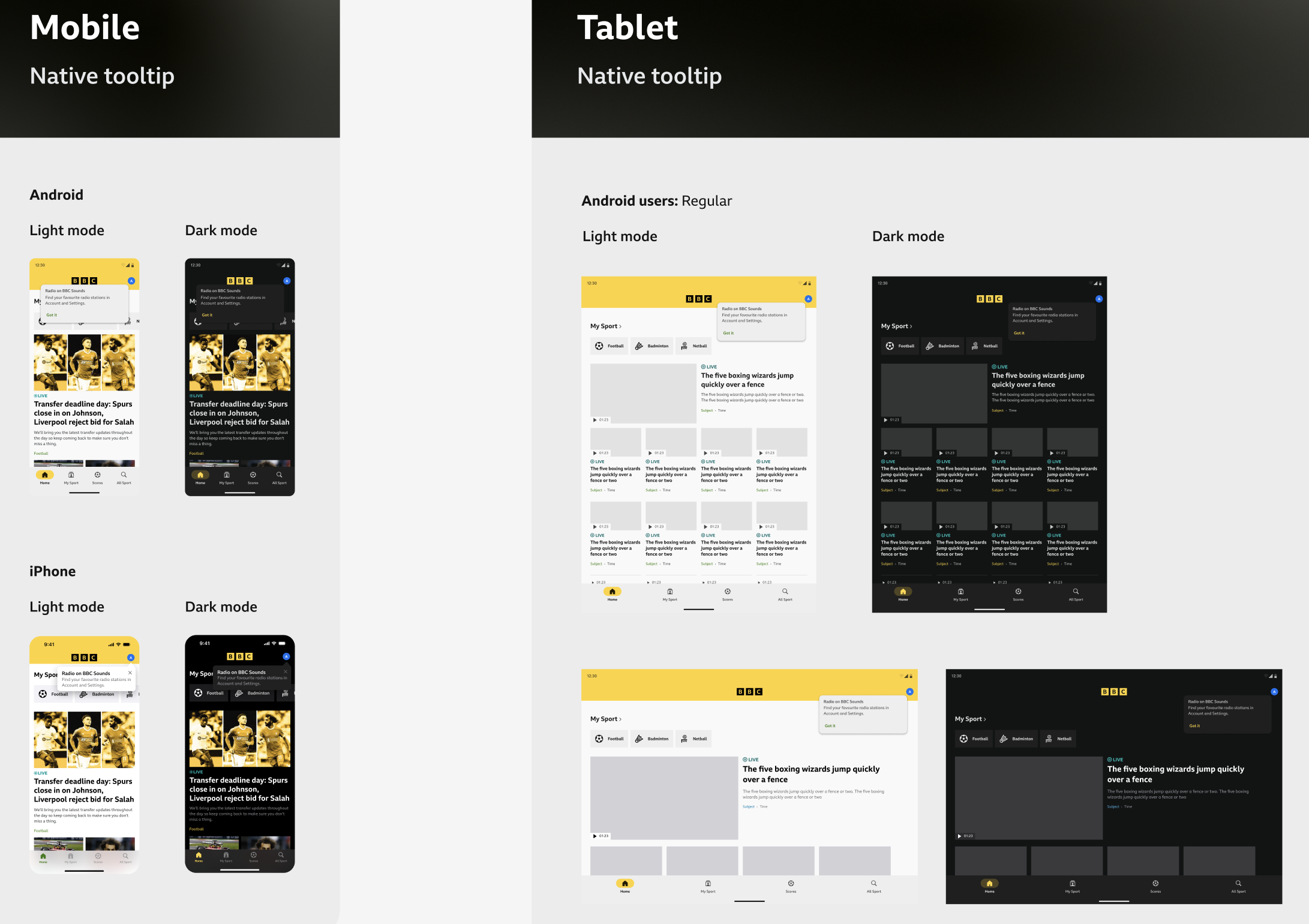
Stakeholders aligned on the tooltip approach and I designed the tooltip using native iOS and Android design system components, ensuring it felt at home on both platforms.
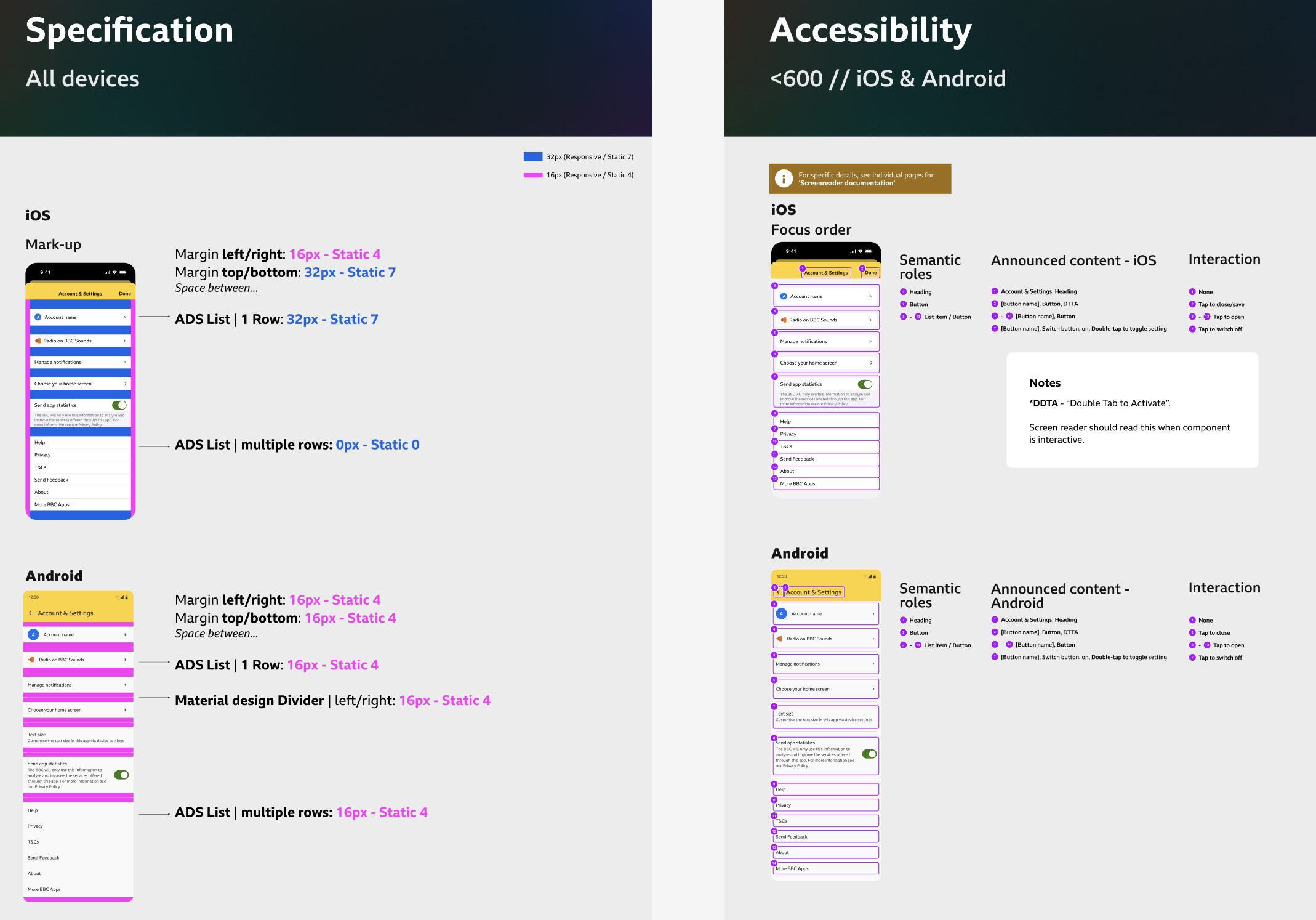
Following this, I created detailed handoff files within Figma covering every required screen — iOS and Android, light and dark mode, mobile and tablet. For key features I went into additional detail and clearly documented accessibility considerations throughout. I then presented the handoff directly to developers and product in a shared session, walking through the work and answering questions to ensure a smooth transition to build.
Reflections
What went well:
This project gave me the opportunity to own and lead a full end-to-end UX process, from initial audit through to final handoff, and I’m proud of what was achieved within a 12-week timeline. Running two rounds of usability testing gave the design decisions real evidential weight, and the stakeholder workshop proved invaluable in aligning the team early and avoiding costly changes later in the process. Achieving a Distinction for the project at university was a rewarding recognition of that effort.
What I’d do differently:
The Radio finding was an interesting and unresolved thread of the project. Testing consistently showed that users mental models connected Radio with live content, yet I didn’t have the time or the scope of this project to be able to fully explore or design for it. Given more time, I would have loved to run a dedicated discovery sprint into the Radio and Live content proposition, as I believe there’s a meaningful design opportunity sitting within that space that this project simply couldn’t investigate.
What’s next:
None of the designs have shipped yet, and I’m looking forward to supporting the development team through the build phase and seeing how real users respond when the changes go live. I’ll be particularly interested to see whether the tooltip successfully resolves the Radio discoverability issue — or whether it confirms that a more fundamental rethink of the Radio proposition is needed.